
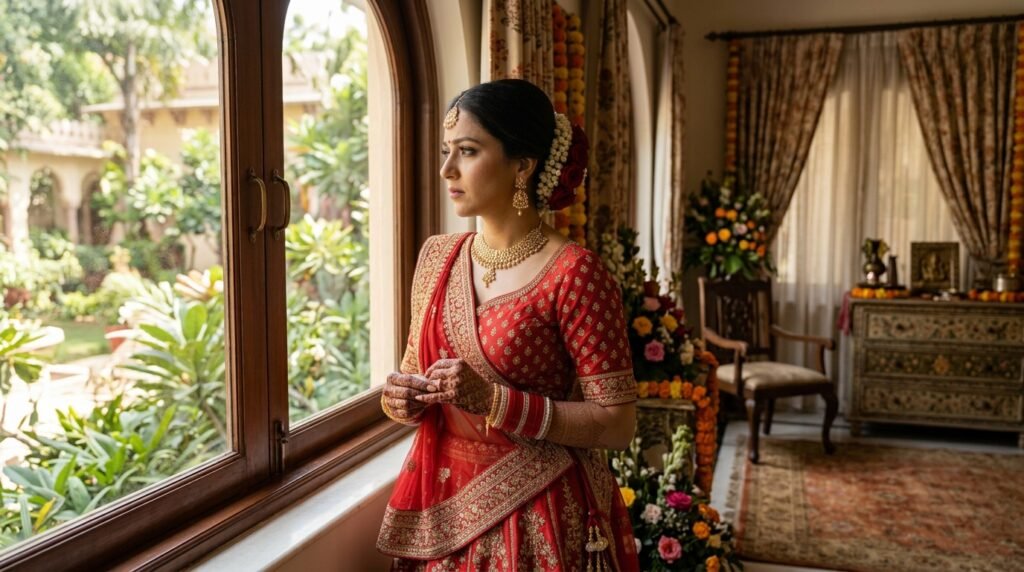
There is a moment, during every Indian wedding, when the bride steps into the mandap. The lights are perfect. The photographer captures the shot. The guests smile. The families beam.
What no one captures is what happens before. The sleepless nights. The quiet tears. The conversations where her preferences were dismissed. The weight of leaving everything she has known—her home, her parents, her room, her autonomy—and stepping into a different house.
Indian weddings are built around the bride in the most visible sense. She is the centerpiece of every function, every photograph, every ritual. And yet, emotionally, she is often the most alone person in the room. Expected to perform joy while managing a private experience that is genuinely overwhelming and rarely given a safe space to admit that.
The Body Is the First Battleground
Before the wedding arrives, the bride’s body becomes a site of collective interest.
Lose a little weight. Get facials. Whiten your skin. Tone your arms. Fix your posture for the photographs. The recommendations come from family, from well-meaning friends, from beauty packages marketed specifically at brides. The message, underneath the helpfulness, is: your natural self is not quite enough for this occasion.
For many brides, this period triggers or worsens body image anxiety they’ve spent years quietly managing. The wedding, which is supposed to be a celebration of her, becomes another deadline by which she must become a better version of herself.
The Weight of Perfection
The pressure on a bride begins long before the wedding day. It begins with expectations—her own, her family’s, and increasingly, the impossibly curated world of social media.
Dr. Shaunak Ajinkya, consultant psychiatrist at Kokilaben Dhirubhai Ambani Hospital, Mumbai, explains the strain: “Social media is filled with highly curated images of ‘perfect’ weddings and luxurious honeymoons. This creates unrealistic expectations, making many brides-to-be feel like they must meet these impossible standards” . Brides compare everything—their dress, their decor, their honeymoon—to influencers and celebrities, leading to feelings of inadequacy, self-doubt, and anxiety.
The financial burden compounds the stress. Many couples go into debt trying to create weddings that match what they see online. This financial strain can last well beyond the wedding day, adding another layer of anxiety to what should be a joyful transition.
One bride, reflecting on her own experience, described how social media warped her expectations: “At every stage of the planning process, Instagram’s algorithm clung to me like a leech I couldn’t shake off. While picking a photographer, my feed led me to thousands of options that muddled my mind. When I was zeroing in on my outfit, other brides’ photos would remind me there was a better lehenga out there.”
The expectation to document every moment creates what Dr. Ajinkya calls “performance pressure,” robbing the bride of the ability to truly enjoy her wedding. Instead of being present, she worries about her looks, her photos, and the validation of likes and comments .
The Family Politics
The Indian wedding is rarely just about the couple. It is a union of two families, and that creates a unique set of pressures.
Dr. Ajit Dandekar, head of psychiatry and psychology at Nanavati Max Super Speciality Hospital, Mumbai, notes that brides face “intense pressure from family and cultural expectations” . Balancing tradition with personal needs becomes a constant negotiation. “Many Indian families see weddings as a union of two families, not just two people. This can create conflict, as parents and relatives may impose their views on the bride’s choices” .
Research supports this observation. Studies have found that couples experiencing high levels of parental interference face significant emotional distress, with one study by Joshi and Verma (2019) reporting a Cohen’s d of 0.63—a substantial effect size. Another study by Rao and Sharma (2017) found that parental interference leads to higher levels of depression and anxiety in couples.
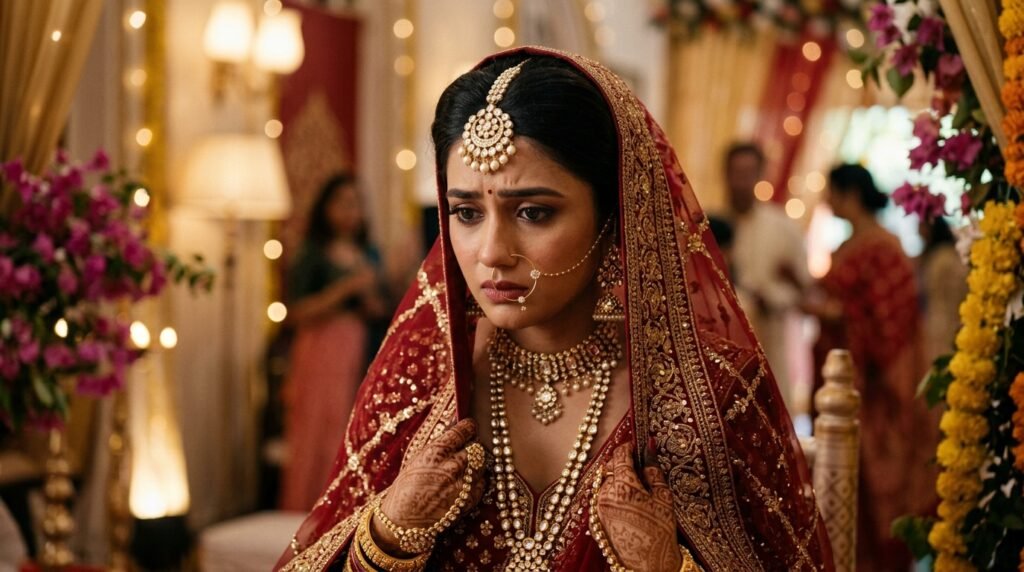
The divided loyalty is a particular burden. One study by Khandelwal (2012) discussed the psychological consequences of cultural expectations on brides, “emphasizing divided loyalty” . Patel (2016) further explored the “psychological stress on brides due to conditioned emotional dependence on parents” .
A bride learns to say yes when she means no. She learns that her voice, however quiet, must be measured against the weight of tradition, the expense of the wedding, and the fear of disappointing everyone who has invested in her big day.
The Invisible Trauma
The emotional stress brides face is often invisible—dismissed as pre-wedding nerves or normal adjustment. But research suggests the burden is far heavier.
A 2025 study on “Marriage Expectations and Mental Health of Indian Women” found that “societal pressure to marry begins early, often in adolescence, and can lead to significant emotional distress including anxiety, low self-esteem, and social isolation” . The study also found that “emotional suffering is often dismissed by family and society, remaining largely unrecognized within public health and legal frameworks” .
The trauma is not just personal—it is structural. The study reframes “marriage-related emotional trauma as a structural issue, not merely a personal or psychological one,” arguing for policy reforms that recognize emotional distress caused by social norms .
Dr. Kiran Bedi made a similar observation in her interview on the Twisha Sharma case: “Behind all the fancy wedding decorations, loud music, happy photos, and social parties, there are often hidden stories that the public never gets to see. These are stories of women who quietly struggle to fit into a completely new life, dealing with emotional pressure, loneliness, fear, and heavy expectations that people rarely discuss openly”.
What Nobody Asks After the Wedding
The wedding ends. The guests leave. The gifts are unpacked. And the bride is left with a new reality—one that often feels hollow.
Dr. Shaunak Ajinkya describes the phenomenon of post-wedding blues: “Some brides feel sad and empty, feeling a sense of void or a loss. Some may feel a sense of loneliness or disconnection since the excitement of planning and constant interaction with family, friends, or vendors is gone, making one feel a bit isolated. Some may lack purpose or direction, wondering, what’s next” .
The weeks and months after the wedding are when the adjustment truly begins. The bride must navigate a new household, new relationships, and new expectations—often without the support system she has always known. Dr. Ajinkya suggests acknowledging these feelings, shifting focus to building a life with the partner, redirecting energy into new goals, and seeking professional help if needed.
The Silent Revolution
Despite the weight of these pressures, a quiet shift is underway.
There is a growing recognition that emotional readiness matters as much as the wedding itself. As one India Today analysis put it, “The wedding, as we’ve come to know it, prepares the couple for a spectacular event. What we now need are tools to prepare them for life after the event” .
Relationship coaches, pre-marital emotional intelligence programs, and therapy are slowly becoming part of the conversation—not as an admission of failure, but as a sign of preparation . “Emotional fluency, conscious communication, personal growth—these are the new luxury checkboxes for a generation of couples who want more than just a grand wedding; they want a good marriage” .
For brides, this shift is a lifeline. It acknowledges that their emotional well-being matters—not just their ability to perform, adjust, or endure. It reframes “preparation” to include the heart, not just the ceremony.