
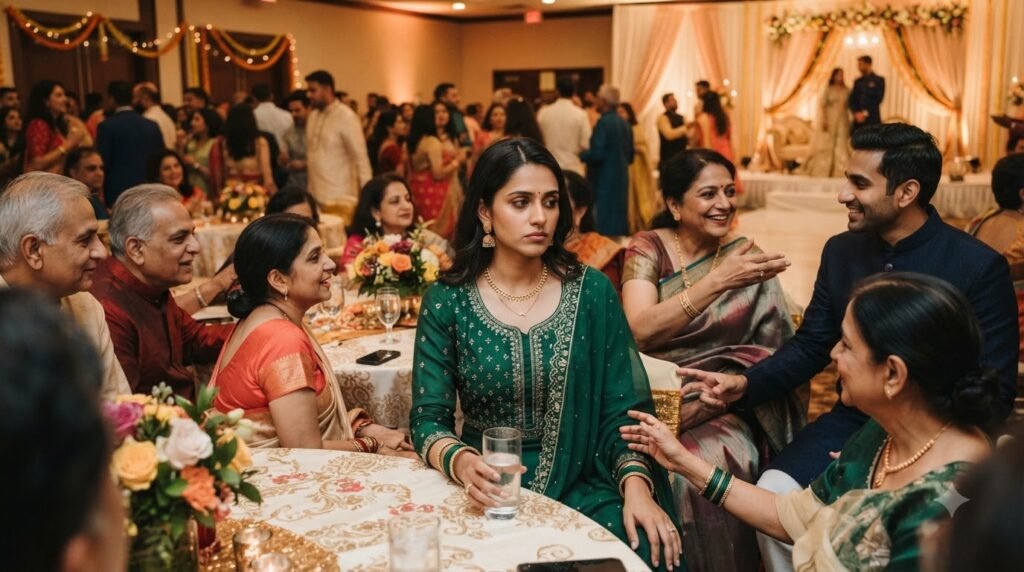
There is a particular kind of quiet that settles in when you turn 30 and you are still unmarried in India. It is not the loud, obvious pressure that people imagine. It is not always dramatic. It is rather subtle.
It is the pause before someone asks about your plans. The way relatives scan the room for a change of subject. The way every family function feels like an interview to be cleared.
If you are turning 30 and navigating the arranged marriage process, you already know this feeling – discomfort and some peer pressure.
This article is not here to tell you that you are wrong for feeling this way. It is here to help you understand what is happening, why it feels so heavy, and how to make decisions that are actually yours.
Turning 30 Feels Like a Deadline
In India, the age of 30 carries a weight that is hard to explain to anyone who has not lived through it. For generations, marriage was expected well before this point. Family structures, social circles, and even casual conversations are still built around the assumption that everyone will be settled by then.
That assumption does not disappear just because society has changed. It lingers in the background. It shows up in the way relatives treat unmarried people at weddings. It shows up in the way parents worry aloud about “what people will say.” It shows up in the way you start questioning yourself, even when you know logically that there is nothing wrong.
The pressure to marry by a certain age is not really about you. It is about a collective anxiety that has been passed down for generations. Your parents absorbed it from their parents. Their parents absorbed it from theirs. And now it lands on you, often in the form of a question that sounds innocent but feels intrusive.
Understanding this does not make the pressure disappear. But it does help to name it. The anxiety is not evidence that something is wrong with you. It is evidence that you are living inside a cultural script that has not evolved with today’s times.
The Real Cost of Rushing
When the pressure builds, the temptation is to speed things up. To say yes to someone who is “good enough.” To convince yourself that compatibility will develop later. To treat marriage as a box to be ticked rather than a partnership to be built.
This is where the danger lies.
Rushing into an arranged marriage because of the pressure that comes with turning 30 often leads to compromises that were never properly examined. A person may overlook fundamental differences in values, lifestyle, or expectations because they feel they cannot afford to wait. They may silence their own doubts because everyone around them is telling them this is the right match.
The problem is – a marriage does not end once the wedding is over. It continues for decades.

This does not mean every decision made under pressure is wrong. Sometimes the pressure helps people take action they would otherwise avoid. But the decision should still be yours. It should come from clarity, not fear.
What Compromise Actually Means
The word compromise gets used a lot in the context of arranged marriage. It is often presented as a virtue. The ability to adjust, to accommodate, to make things work. But compromise has two very different meanings, and confusing them causes real damage.
There is practical compromise. This is the kind of adjustment that every relationship requires. Sharing space, negotiating schedules, learning to live with another person’s habits. This kind of compromise is healthy and necessary.
Then there is fundamental compromise. This is when you give up something that is central to who you are. Your values. Your career. Your relationship with your own family. Your sense of autonomy. This is not compromise. It is self-erasure.
The pressure to marry by 30 pushes many people toward the second kind without realizing it. They are told that adjusting is part of marriage. They are told that no one gets everything they want. They are told that being too selective is a problem.
But there is a difference between choosing to compromise on small things and being asked to give up large ones. Knowing the difference is one of the most important skills you can develop during this process.
Why the Timeline Is Not Final
The narrative around turning 30 assumes that there is one correct timeline. Marriage by a certain age. Children by a certain age. Everything in its proper order.
But this narrative ignores the reality that people’s lives unfold differently. Some people find their person at 25. Some at 35. Some at 45. Some never marry and build fulfilling lives in other ways. None of these paths are failures.
This is not to dismiss the real consequences of social pressure. Families do worry. Relatives do comment. The process can feel exhausting when you are constantly being reminded of a clock that other people are watching.
But it is important to remember that the clock is not real. It is a social construct. And while it has real effects, it does not have to determine your choices.
How to Handle the Pressure Without Losing Yourself
There is no perfect way to navigate this. But there are ways to make it more manageable.
Name the pressure honestly When you are feeling the weight of turning 30, acknowledge it. Do not pretend it is not there. The pressure is real. Naming it makes it easier to separate your own desires from the expectations that have been placed on you.
Distinguish between urgency and importance The pressure makes everything feel urgent. But urgency and importance are not the same thing. Finding a partner is important. Rushing into the wrong one is not worth it because you feel like time is running out.
Have honest conversations with your family This is not always easy. But it helps to tell them what you are feeling. Not to argue, but to explain. Many parents respond to pressure because they are worried about your future. When they understand that you are taking it seriously, even if the timeline looks different from theirs, the dynamic can shift.
Talk to other people in the same position There is comfort in knowing you are not alone. The experience of turning 30 and facing marriage pressure is common, even if it feels isolating. Friends, cousins, or online communities can remind you that your feelings are valid and shared.
Stay grounded in what you actually want In the middle of all the noise, it is easy to lose sight of your own preferences. Take time regularly to check in with yourself. What kind of life do you want? What kind of partnership? What are you willing to compromise on and what is non-negotiable? Write it down if that helps. Having your own clarity makes it harder for external pressure to override it.
The Decision Is Still Yours
The hardest part of navigating arranged marriage pressure is remembering that the decision is yours. Not your parents’. Not your relatives’. Not the voice in your head that says you are running out of time.
You are allowed to take the process slowly at your own pace. You are allowed to want compatibility and love. None of that is wrong.
But you are also allowed to say no. You are allowed to wait. You are allowed to have standards that are not negotiable. You are allowed to prioritise your own well-being over the anxiety of others.
Turning 30 does not mean you have missed your chance. It does not mean you need to lower your expectations. It does not mean you should settle.
It means you have lived three decades of life and you are still here. That is not a failure. That is a foundation.
You are not behind. You are not running out of time. You are exactly where you are. And that is enough.